
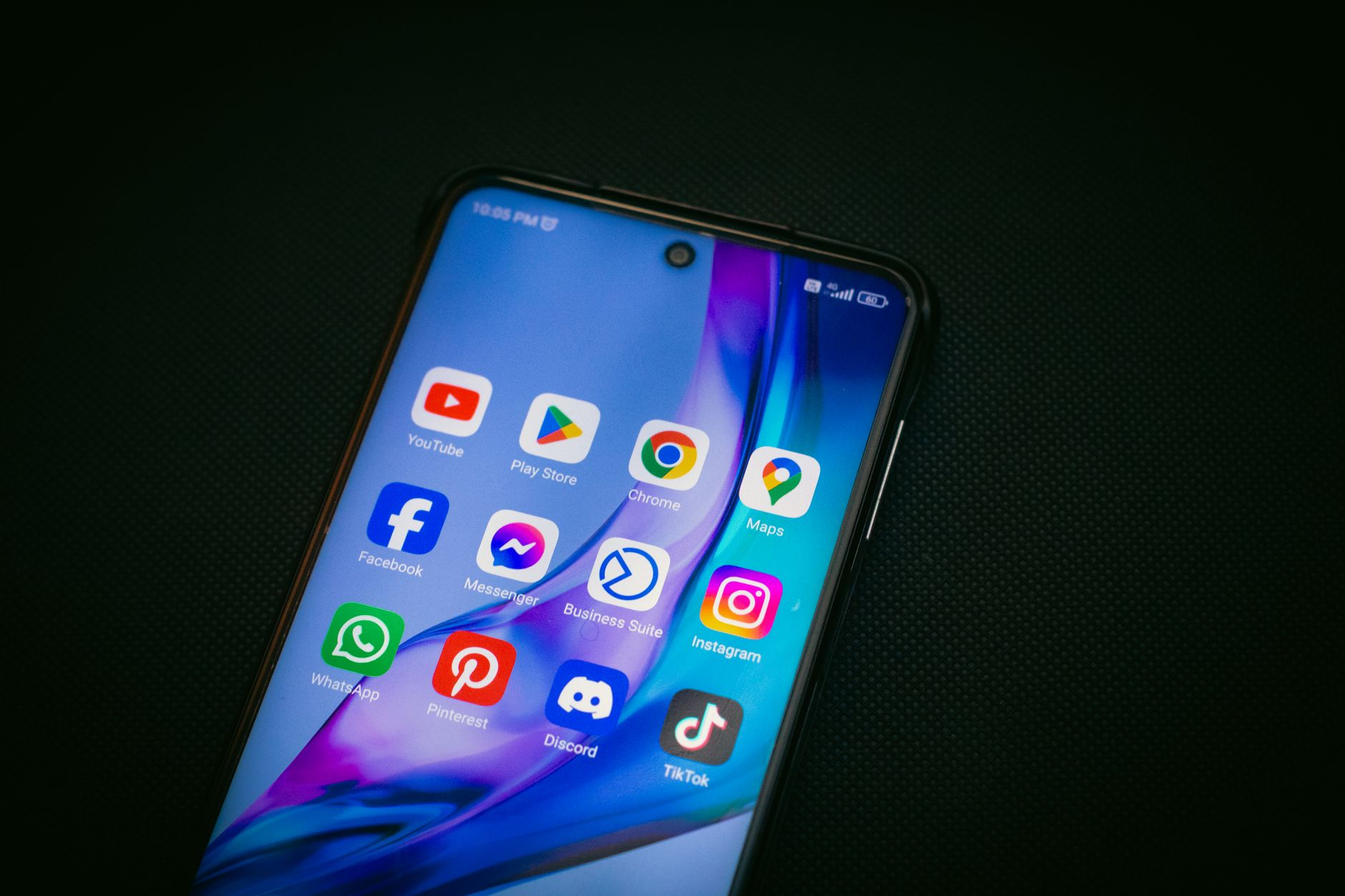
I recently stumbled upon a corner of YouTube I had no idea existed. I was hooked by the 1 hour-ish long YouTube commentary that explored a TikTok genre I never would have imagined, and now I’ve got all sorts of questions.
The spark
The YouTube video that started my descent into the rabbit hole, was Everything We Know About
MiaMakesManifest: The Internet’s Creepiest Rabbit Hole, by Hannah @HannahTheHorrible.
I’m glad I came across Mia’s TikTok account via Hannah, because I’m not a huge fan of the horror genre (and let’s be honest, POTS and jump scares do not go well together). Hannah’s commentary was super helpful in explaining not only what was happening, but also the specific style of TikTok content she was reviewing and the audience reactions. I won’t be spending too much time going into an explanation of the content in the MiaMakesManifest TikTok account, because while watching Hannah’s breakdown of this series, many other thoughts about media literacy, social media platforms, and target audiences came to mind. I’ll leave the review and critique of the source material to those, like Hannah, who do a far better job of unpacking the nuances than I could ever do, but in a nutshell…
MiaMakesManifest
Mia shares manifestation tips in her TikToks. She’s bubbly, energetic, and happy to be sharing the manifestation strategies that have worked for her, attributing the recent purchase of her very own home as evidence for the success of these strategies. As Mia continues to share, things get a little (ok, very) weird, and viewers are left wondering what she really manifested. It’s giving, “be careful what you wish for.”
To avoid spoilers, I won’t be saying too much more about Mia’s work here, so if you’re interested in watching the full story unfold, you’ll need to check out Mia’s TikTok
Alternatively, if you’re not on TikTok, you can also see Mia’s content through her Instagram account.
Hannah’s commentary
And now to the things that popped into my head while watching Hannah’s YouTube commentary on MiaMakesManifest...
I was fascinated by the way Mia’s videos have been received by her audiences across both platforms. When I first started watching Hannah’s video, I could see how Mia’s content could be viewed as “real.” Her first few videos look much like many of the other accounts out there that share manifestation strategies. She includes mention of techniques that mental health professionals might use (i.e., tapping), giving no indication that she’s “acting.” It really does feel like Mia is one of those creators who shares tips and tricks for manifesting the life you want, and this is where my questions began.
Breaking the Immersion
Mia not only doesn’t disclose her account’s content as a version of storytelling/narrative/fiction, but she also does not respond to commenters who claim her content is fake. In fact, I admire her ability to not engage with these comments, because it really prolongs the fantasy (although fantasy implies something positive, in my mind, so perhaps dystopia is a better word). Viewers are pulled into this creepy story of what’s happening in Mia’s house through her content about manifestation, slowly revealing more and more paranormal activities. Now, Hannah’s commentary about Mia’s videos is partially focused on highlighting the hints that something isn’t right in Mia’s house, but she also occasionally does something she calls “breaking the immersion” (27:03) to discuss the more practical effects in Mia’s content (e.g., the bathtub incident from approximately 26:56 to 28:21). In my opinion, these moments only add to Hannah’s insights but I can certainly appreciate how her attempts to figure out how Mia achieved some of the practical effects does give viewers some space to process that Mia’s videos are not real, thereby breaking the immersion. I’m not sure this is a bad thing though. If you’re watching a YouTube commentary on a TikTok series, chances are you’re looking for this kind of insight from the YouTuber, so while Hannah seems apologetic when she’s talking about these things, I’m sure her viewers are appreciative (or at least, I was!)
Audience Reactions
After discussing her opinions on how the bathtub practical effect was achieved, Hannah then moves onto the next point that really struck me: the difference in reactions between Mia’s TikTok and Instagram audience. My following observations are based purely on Hannah’s comments – I’ve not done any independent verfication, and my opinions are solely based on my own thoughts and experiences, but I think there’s value in sharing them anyway.
From about 28:22 to 30:30, Hannah specifically refers to the differences she’s noticed in viewer comments on Mia’s TikTok and Instagram accounts. She begins by saying “it’s been really, really entertaining. On TikTok, most people on TikTok are aware that this is a horror series and they’re either playing along, or some of course are saying it’s fake,” (28:22 to 28:34), but that “everyboy on Instagram, thinks that she’s [i.e., Mia’s] being so for real” (28:49 to 28:52). Hannah basically paints the TikTok audience as being in on the joke, while the Instagram audience has no idea what a “series” or “ARG” is, which means their comments seem to be more about being helpful – like the plumber who attempted to give advice for solving the bathtub incident – or pointing out that the content is fake and that Mia is acting. Hannah’s observation of these comments is really quite interesting, she says “you’re the one that’s not in on the joke, my guy” (29:19 to 29:21). Furthermore, Hannah suggests that the latter group of Instagram audience members (i.e., the ones who exclaim leave gotcha type comments) are almost embarrasing themselves by proving they can spot fake content. Hannah ends the “immersion break” at about 29:53, diving back into her commentary of the plot points, red herrings, and creepy signs throughout the rest of Mia’s videos, but it is this particular immersion break that really got me thinking, because I was fascinated by Hannah’s observations between the two different platform audiences.
Questions I have
As I mentioned before, my following opinions are not grounded in any kind of research evidence, nor have I verified Hannah’s comments, but I do feel that my professional judgement and general curiosity give me some sort of credit here, but, you’ve been warned! So, the questions I have after watching Hannah’s commentary on Mia’s TikTok series are:
It’s known that TikTok’s algorhythm is particularly complex and that it’s For You Page often succeeds in suggesting content that is extremely interesting to each user. So, would any TikTok user stumble across content like Mia’s, or would only those who were looking for this kind of storytelling mode find it?
I assume that the generational use/choice of social media platforms is widely agreed upon. That is, I assume that Gen Z are more likely to be on TikTok, while Millenials and Gen X’ers are more likely to be on Instagram. So, given Hannah’s observations about the kinds of content left on Mia’s TikTok and Instagram accounts, does audience age have anything to do with their need to label social media content as “real” or “fake,” and even more than that, does it drive their need to “prove” to the world that they can spot fake content?
Which leads me to wondering about how different generations use social media and what they want from their content. It seems to me like the older generations like to use their social media platforms for information sharing, updates about personal lives, following celebrity news, etc., while turning to more traditional content platforms for entertainment, such as Netflix, Audible, Spotify, etc., all of which are very passive engagement platforms. Conversely, perhaps Gen Z is more interested in using social media platforms not only in the ways that Gen X and Millenials are, but also as replacement entertainment content platforms, too. So, are Gen Z blurring the lines of their feeds between “real” and “fake” intentionally?
Gen X and Millenials remember a time when the information they received was generally accepted as truth, and have endured several waves of learning to apply critical thinking to new tools, which Gen Z has had this instruction (in theory) applied throughout their life. It my opinion, the “before” time that Millenials and Gen X’ers experienced, coupled with how convincing mis- and disinformation makes me wonder if these older generations feel almost “proud” when they can spot the fake?
From my perspective as a Millenial, I would assume that many of my peers expect their social media feeds to provide interesting content that is based on truth, or at the very least, is very clearly identifiable as “fake” when it’s not. Short videos from films or TV shows are obviously labelled as such. It’s clear when something is fictional, which I think almost allows viewers to switch off their critical thinking brains for a minute, and just enjoy the content knowing that no one is going to think it is real. But… this doesn’t seem to be such a priority for those younger viewers over on TikTok.
Is it possible that TikTok viewers are so used to differentiating between real and fake content, that collectively, they don’t feel the need to prove they can do this? Hannah herself says that “it’s really embarassing that people can’t just take a step back” (29:27) without needing to prove it’s a lie because “it’s like, no, we all know that. Like, we’re all in on it and you’re not part of the club, yet, so get on board” (29:34 to 29:39). It’s my assumption that Hannah is part of Gen Z, and so I’m wondering if her opinion is reflective of the larger Gen Z population, because it’s clear that she supports the TikTok audience’s preference to play along and experience the content.
the media literacy of it all
Which brings me to the bigger question I have running around in my head about this kind of content. Is it problematic? My initial reaction to Mia’s first few videos was one of fear. I immediately worried about whether or not innocent viewers would be able to determine that Mia’s content was telling a story, and not really about her sharing her manifestation techniques. This was before I knew where Mia’s story was headed, and after about 5 videos in, I realised and felt a bit better about it, but still, my initial question remained: How problematic is it that this kind of content is out there? Content that starts of seeming real, but then isn’t? Mia’s use of the paranormal did make me feel like viewers would be able to identify this for themselves, but the mis- and disinformation that travels around the internet and this kind of content that tells a story without being overly obvious about it could be dangerous. I mean, imagine if Mia’s story didn’t turn down the paranormal route, but instead it plot-twisted to something far more dangerous that could be happening in the real world and, if viewers didn’t know it wasn’t real because Mia hadn’t declared it, could they then identify it? Would they want to?
Don’t get me wrong, I am not saying this kind of content on TikTok or any social media platform should not exist. I’m truly quite excited about it and all the possibilities for how stories could be told and experienced. Talk about immersive! But, it’s yet another crucial evidence point for why information literacy is key. In the end, it doesn’t matter that Gen X/Millenials might be more inclinded to publicly label something as “fake,” while Gen Z wants to remain immersed. What does matter, is that even if they label it or not, all audience members need to be able to differentiate between real and fake, because it’s not always clear, but it is always necessary.


Leave a Reply